
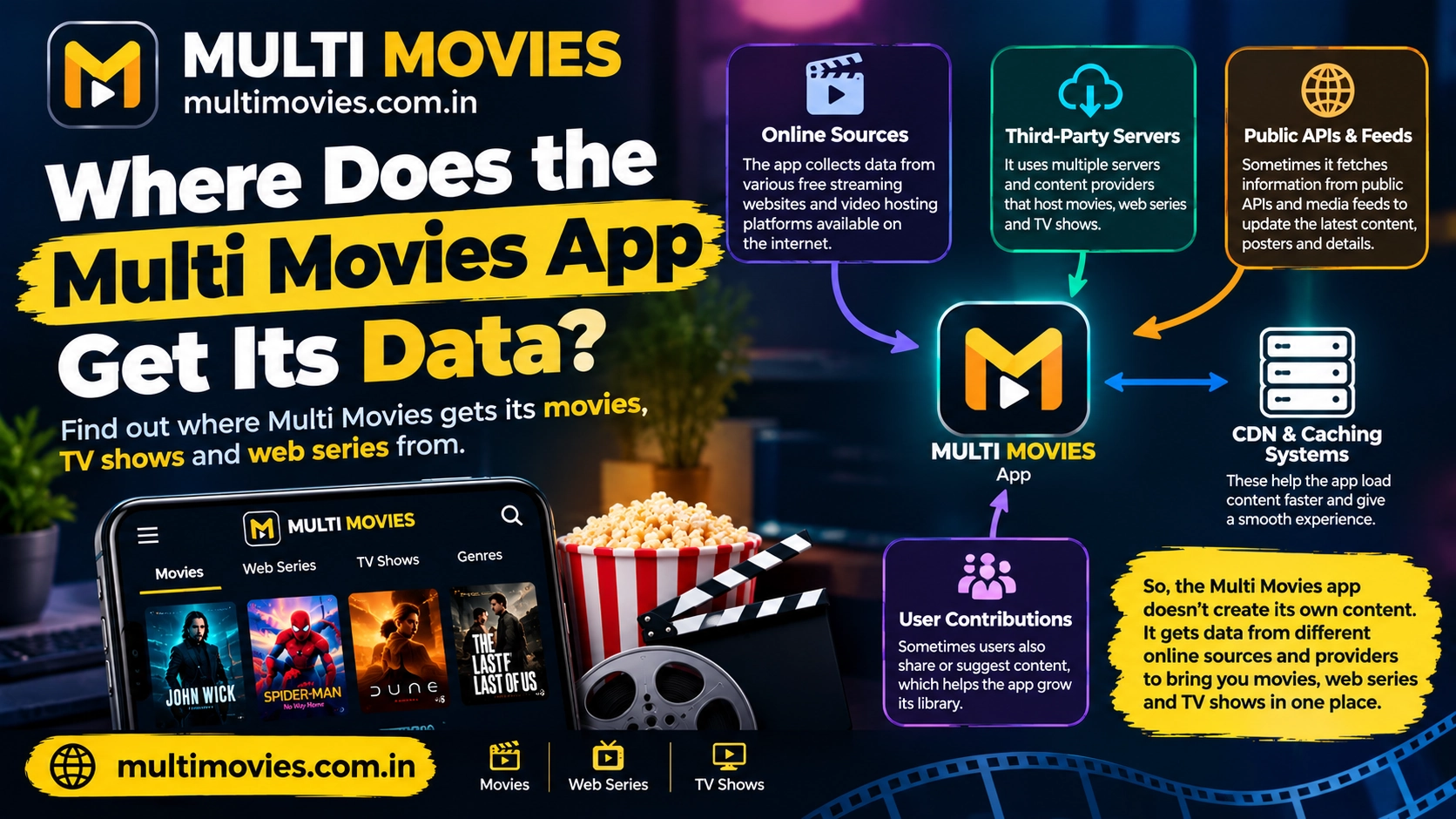
Where Does the Multi Movies App Get Its Data
When exploring a movie discovery application like Multi Movies, users often wonder how the platform builds its extensive library of titles, posters, and summaries without hosting full video files. Understanding the backend data sources clarifies how information is gathered, updated, and presented to users on their mobile devices. This blog post explores where Multi Movies sources its information and how it maintains an updated catalog.
Public Metadata Sources and Aggregation
Multi Movies gathers its content catalog primarily from open-access entertainment directories, public movie databases, and media APIs. Because the application functions strictly as an information and discovery guide rather than a video hosting service, it does not require private server storage for full films.Instead, it compiles lightweight text metadata, release schedules, director details, cast information, and genre categories from widely available public entertainment records.
Publicly Available Video Previews
When it comes to visual content like promotional videos and teasers, the application relies on publicly accessible streaming channels and open video repositories. Rather than storing large media files locally on its servers, the app links to or embeds official trailers from public video-sharing networks. This approach ensures that users can preview upcoming cinematic releases smoothly while keeping the application size lightweight and optimized for everyday mobile use.
Core Types of Data Collected
To understand how the app functions, it helps to look at the specific categories of data it pulls into its interface.
Text Summaries and Plot Overviews
The app pulls brief plot descriptions and narrative summaries so users can quickly read about a movie before deciding to watch it elsewhere.
Cast and Crew Details
Information regarding actors, directors, writers, and production years is aggregated to help users research their favorite cinematic talent.
Promotional Posters and Artwork
High-resolution movie posters and thumbnail graphics are fetched dynamically to give the application a clean, modern, and visually appealing interface.
Breakdown of Data Management
A quick look at how the application handles different data categories highlights its lightweight architecture.
| Data Type | Source Origin | Storage Method |
| Movie Metadata | Public Entertainment Directories | Lightweight Cloud Database |
| Trailers & Teasers | Public Video-Sharing Networks | Embedded Online Links |
| Posters & Artwork | Open Media Repositories | Dynamic Image Caching |
| User Watchlists | Local Mobile Activity | Local Device Storage |
Ensuring Fresh Content Updates
To keep entertainment fans informed about trending media, the application periodically syncs with its backend metadata sources to fetch newly released titles, popular television series, and upcoming box-office trends. Because it only fetches text records and image links, these updates happen quickly without consuming massive amounts of internet data or slowing down your smartphone’s processing speed.
Conclusion
Multi Movies gathers its data from public entertainment databases, open media repositories, and publicly available video preview sources.By focusing strictly on metadata, posters, and trailers rather than heavy video hosting, the app delivers a fast, organized, and lightweight browsing experience. Knowing where this information comes from helps users appreciate how the app efficiently serves as a pocket movie guide.